Where Communities Find Each Other
Long after the promotional banners come down and publisher trailers circulate online, what people remember about a gaming convention is rarely a three-minute demo behind velvet stanchions. It is the ninety-minute cooperative campaign with four strangers at a borrowed table, the late-night arcade cabinet line where veterans coach newcomers, or the conversation with a solo creator at an indie festival such as BitSummit in Kyoto's Miyako Messe or IndieCade.
Fan spaces operate by very different social norms from the commercial show floor. No brand ambassador is scanning your badge for marketing metrics, and nobody expects you to move along after two rounds. Knowing how these rooms work—especially if you are attending solo—turns an overwhelming hall into a welcoming third place.
Tabletop Libraries and Looking-for-Group Signals
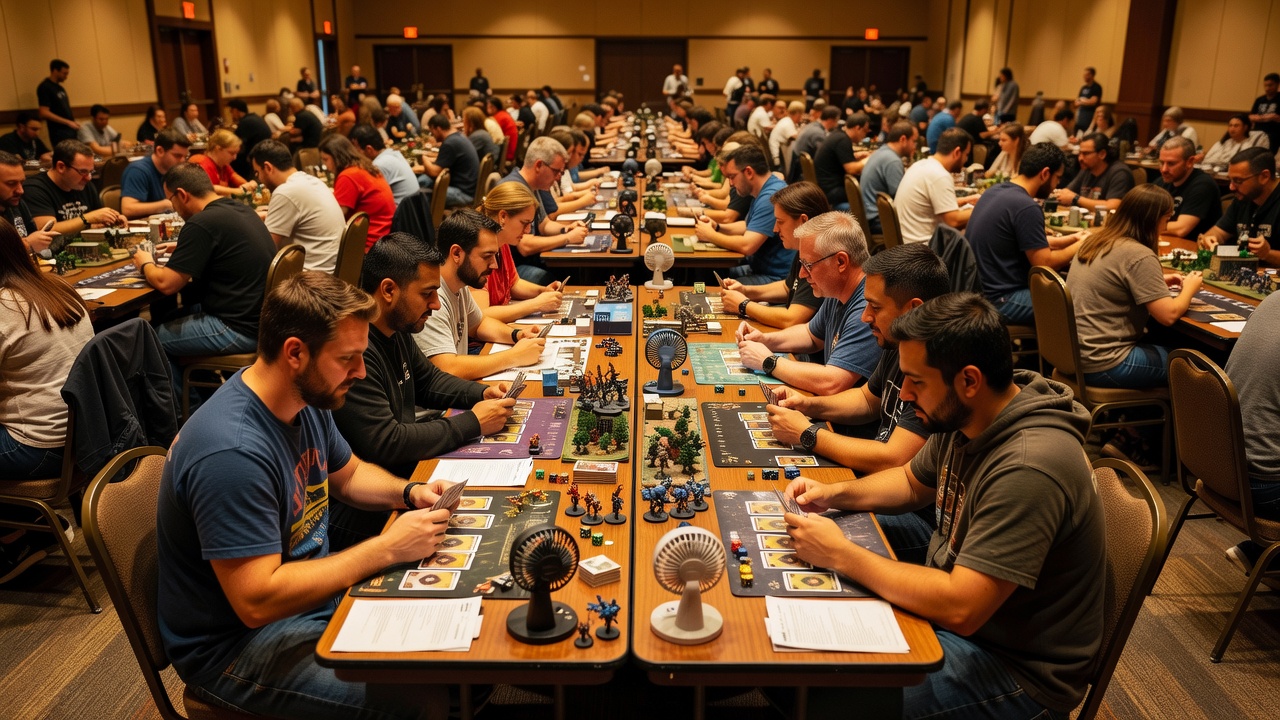
Major tabletop gatherings such as Gen Con, UK Games Expo at NEC Birmingham, and Tabletop Scotland in Edinburgh build entire economies around open play libraries. If you arrive alone, walking past rows of already-seated groups can feel intimidating. Look for the "Players Wanted" or "Teacher Available" cones stocked at library check-out desks. Placing a cone upright at an empty table signals that you have a boxed game ready and welcome anyone—often filling a four-seat Eurogame or social deduction round in under ten minutes.
When borrowing from a convention game library, inspect component counts briefly before leaving the counter, use sleeved cards gently, and return boxes fifteen minutes before the room's posted curfew. Volunteer librarians track hundreds of titles across a weekend; keeping tables tidy guarantees the library stays open late the following night.
Bring-Your-Own-Computer (BYOC) LAN Halls and Retro Arcades
At festival-style gatherings such as DreamHack Winter at Elmia Exhibition Centre, Assembly Summer at Messukeskus Helsinki, and MAGFest at Gaylord National Resort, the heart of the event runs 24 hours a day inside LAN and arcade rooms. Even if you did not haul a desktop tower on a trolley, public console freeplay banks and imported rhythm cabinets offer accessible entry points. Follow unspoken cabinet etiquette: place a single coin or token card on the bezel ledge to hold your turn, keep drinks far away from CRT monitors and fightsticks, and swap out promptly if a line has formed behind you.
Indie Showcases and Artist Alleys
Independent developer rows and artist alleys are self-funded workspaces, not corporate booths. Creators at small tables have often driven hours or flown internationally on tight budgets to show one project. If you are not ready to buy prints or wishlist a game immediately, honest curiosity is still valued—just avoid blocking a tiny two-meter booth for twenty minutes of unrelated chat while paying visitors queue behind you. Ask before photographing artwork up close, and always check an artist's handle card rather than snapping pictures of price sheets without permission.
"Cosplay is not consent: a quick verbal request and waiting for a clear nod before raising a camera keeps hallways respectful, especially when someone is resting or fixing a strap." Convention Community Standards Summary · Mosaic Coastal Mosac
Cosplay Lounges and Prop Check Protocols
Most multi-genre conventions—including Comic-Con International, PAX, and Gamescom—maintain dedicated cosplay repair stations stocked with hot glue, safety pins, and thread, staffed by fellow builders who understand mid-day seam failures. Before entering the main concourse with crafted props, visit the venue's weapons-check desk immediately after badge pickup. Organizers inspect foam density, peace-bond tags, and rigid edges against local municipal laws so security does not turn you away at an interior theater checkpoint later in the afternoon.
Accessibility & Sensory Notes for Community Rooms
Arcade halls and late-night rhythm zones routinely exceed 85 decibels; pack foam or filtered musician earplugs if you plan to spend an hour near cabinets. In contrast, designated board-game halls and indie reading rooms generally maintain conversational acoustics, making them dependable evening refuges if stage lighting and crowd noise start wearing you down.
To understand how we track official venue changes, badge policies, and community announcements accurately, continue to Separate Announcements from Noise.