Make the Hall Work for You
Every major gaming convention looks simple on a glossy PDF map, yet the moment you step off the escalator into a sprawling exhibition complex, scale distorts your instincts. Walking from Hall 6 to Hall 10 at Koelnmesse during Gamescom, or crossing between the Arch and Summit buildings at the Seattle Convention Center during PAX West, takes far longer than a quick glance at a booth number suggests. When crowds thicken around flagship publisher pavilions, a two-hundred-meter corridor can easily become a fifteen-minute shuffle.
Good floorcraft treats physical space the same way a thoughtful player treats stamina in an action RPG: spend it deliberately on what you actually came to experience, and never waste it on blind wandering. Instead of treating the show floor as one continuous labyrinth, divide every venue into four functional zones before doors open: high-draw anchor halls, mid-tier peripheral aisles, community and tabletop rooms, and decompression corridors.
The First Forty-Five Minutes
The opening surge at venues such as Makuhari Messe for Tokyo Game Show or ExCeL London for EGX follows a predictable physics. Roughly two-thirds of the morning queue sprints straight toward the largest vertical banners—usually two or three triple-A demo rigs whose wait times hit ninety minutes within fifteen minutes of entry. Unless you hold an early-access press badge or a timed reservation pass, joining that initial stampede turns your freshest morning hours into standing time on poured concrete.
An alternative opening move pays off across almost every large show: walk past the central spectacles and start at the far perimeter or the indie showcase alley. At PAX events, the PAX Rising booths sit slightly off the steepest main bottlenecks during the first hour; at Gamescom, the Indie Arena Booth in Hall 10.2 offers dozens of playable builds with five-minute turnarounds while Hall 6 and Hall 7 lock down. You can play four distinct games, speak directly with the developers, and still cross back toward larger stages once afternoon meal waves thin their lines.
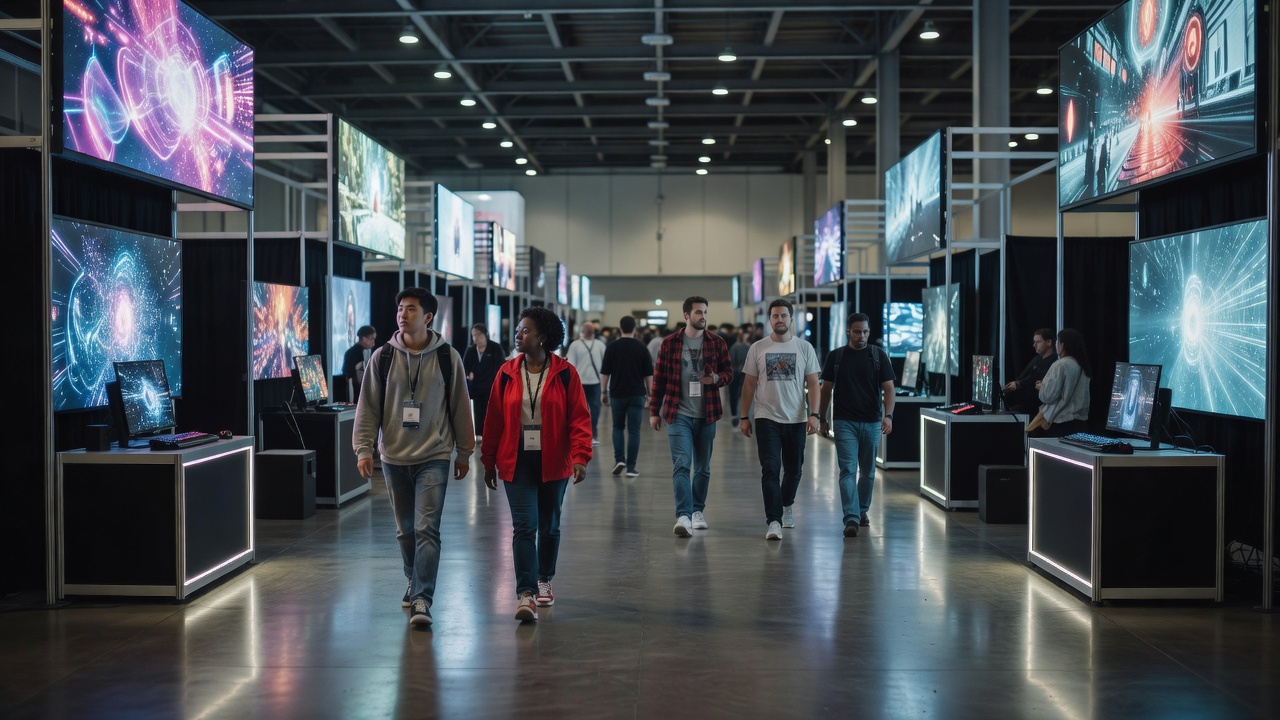
Reading Queue Density Without App Lag
Official convention apps frequently update wait-time estimates manually, meaning a "30-minute wait" badge can trail reality by forty minutes. Learn to read physical queue signals yourself. Count how many switchbacks are filled inside the stanchions, then check whether the demo is running timed twelve-minute slices or untimed open play. A booth running four stations of a fifteen-minute boss rush clears only sixteen players per hour; even a short-looking line of thirty people translates into nearly two hours of standing.
| Queue Pattern | Typical Throughput | Recommended Decision |
|---|---|---|
| Short 5-min arcade loop, 12+ kiosks | 100+ attendees/hour | Join anytime; line moves steadily |
| Guided 20-min theater presentation | Fixed batch every 25 min | Ask staff for exact next door-open time |
| Open untimed indie desk, 2 chairs | 8–12 attendees/hour | Return during main-stage keynote or dinner |
| Badge-scan virtual queue | Slot assigned remotely | Claim slot at 10:00, explore other halls meanwhile |
Footwear, Sightlines, and Anchor Landmarks
Convention flooring is unforgiving because carpeted aisles mask concrete slabs underneath. Carrying a light folding stool is banned in many fire-code jurisdictions—check organizer rules at Gen Con or San Diego Comic-Con before packing one—so cushioned walking shoes and rotating weight between sitting panels and standing demos matter more than endurance pride. Whenever you enter a new hall, pick two high structural landmarks—a numbered pillar, an overhead rigging number, or an exterior glass atrium—rather than booth signage, which blends together at eye level.
"Before you line up for any hardware demo, find the nearest water refill station and the quietest hallway bathroom. Those two coordinates save more convention hours than any VIP lanyard." Floorcraft Field Notes · Mosaic Coastal Mosac
Sensory Load and Quiet Recovery Rooms
Modern exhibition halls stack directional PA systems, subwoofers, and LED video walls back to back. Even seasoned attendees experience sensory saturation after four hours under stage trusses. Most established European and North American conventions—including PAX West, UK Games Expo at NEC Birmingham, and Assembly Summer at Messukeskus Helsinki—now designate low-stimulation AFK or quiet rooms away from the exhibition floor. Note their room numbers before you feel overwhelmed, not after.
Accessibility & Mobility Notes for Exhibition Floors
Check whether the venue provides dedicated medical or accessibility sticker pickup at Will Call prior to general doors. At ReedPop and Koelnmesse venues, accessibility badges typically allow companion seating in panel rooms and access to seated queue alternatives for mobility aids. Keep a printed copy of your venue's elevator map, as freight-adjacent passenger lifts are often tucked behind concession corridors.
Once you understand how foot traffic pulses across a building, move on to A Programme You Can Actually Follow to match your hall routes with a realistic daily schedule.